


Dental Bridges
If you are missing teeth, you know how debilitating that gappy smile can be. In addition to making you feel self-conscious about your teeth, you might also have trouble chewing certain foods or talking without a lisp. Fortunately, dental bridges can fill in those gaps and help your smile to look 100% natural.
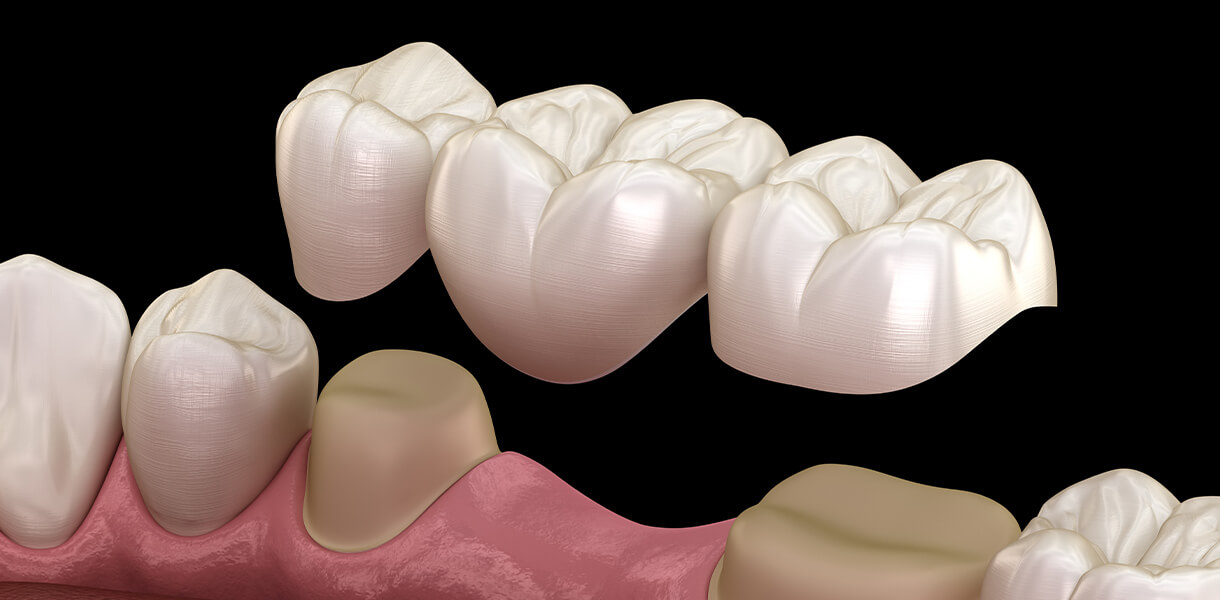
Unlike dentures, which are typically designed to be removable, dental bridges are fixed in place. This means that you won’t have to worry about those dentures slipping or falling out. This feature also makes bridges easier to clean. Because they are fixed in place, you can brush and floss them just like your natural teeth. Also, since dental bridges are cemented to other teeth or supported by a hidden metal framework, they typically aren’t as noticeable as removable dentures. Dental bridges are designed to span the gap between areas where teeth are missing, and they are typically supported by the surrounding teeth.
Benefits of Dental Bridges
- Distribute Bite Forces Evenly: When you have missing teeth, some of your teeth do more work than others, which can compromise their health, too. This is the reason that people with a few missing teeth usually end up with a few more missing teeth as time goes on. However, bridges help to distribute the bite force evenly throughout your mouth, keeping your teeth strong and healthy.
- Maintain Your Face Shape: Your jaw requires stimulation to stay healthy and strong. When teeth go missing, your jawbone doesn’t receive this stimulation, and it can start to melt away—altering the shape of your jaw line. However, tooth replacements like dental bridges can help to recreate the natural stimulation that your teeth would create, keeping your jawbone strong and maintaining your face shape.
- Keep Teeth From Drifting Apart: Teeth have a natural tendency to spread apart to fill empty spaces, which is why a single missing tooth could damage your entire smile. However, dental bridges can fill these voids, so that your teeth stay straight and beautiful.
- Cost: One of the reasons people choose dental bridges over dental implants is cost.
Types of Dental Bridges
Because everyone’s dental situation is a little bit different, there are a variety of dental bridges available on the market. There are two main types of bridges, tooth-anchored bridges and implant-supported bridges. As the name implies, tooth-anchored bridges are supported by the surrounding teeth. These types of bridges are right for people who have healthy, strong teeth on either side of the missing tooth. However, if this isn’t the case for you, our doctors might recommend an implant-supported bridge. With an implant-supported bridge, a dental implant is placed on either side of the missing tooth, and then when the area heals, those teeth are used to support the bridge. In addition to these two main types of dental bridges, there are also:
- Cantilever Bridges: Cantilever bridges are used when there are only teeth on one side of the missing tooth. These bridges use a dental crown to cover the healthy tooth, which has a false tooth floating alongside of it. Cantilever bridges typically aren’t recommended for back teeth, since they aren’t as strong as traditional bridges.
- Maryland Bonded Bridges: Bonded bridges, also called Maryland bonded bridges, are created out of plastic, porcelain, or porcelain fused to metal. These false teeth are fixed to a metal or porcelain framework made with small wings, which are then cemented to the surrounding teeth.
If you have missing teeth, make an appointment with one of our doctors today to see if a bridge would be right for you! Our dentists will carefully evaluate your smile, talk with you about your concerns, and make a recommendation based on your exam and personal preferences. Dental Excellence looks forward to serving you.
Serving patients from all over.
Independence | Blue Springs | Lee’s Summit